In today’s fast-paced digital world, short forms and abbreviations dominate how people communicate online.
One such commonly seen abbreviation is “TTM.” Many users come across it in chats, social media comments, or texting apps and wonder what it actually means.
The curiosity often comes from its versatility “TTM” can carry slightly different meanings depending on context, tone, and platform.
People search for this term because they want clarity before responding correctly, especially in casual or unfamiliar conversations. Misunderstanding it can lead to awkward replies or missed communication cues.
Definition & Meaning
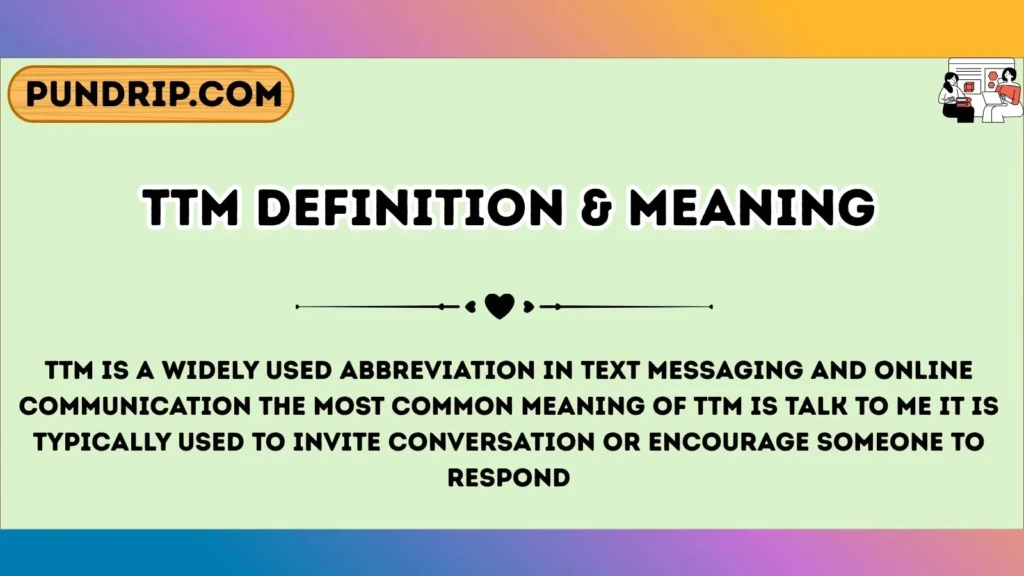
“TTM” is a widely used abbreviation in text messaging and online communication. The most common meaning of “TTM” is “Talk To Me.” It is typically used to invite conversation or encourage someone to respond.
When someone sends “TTM,” they are usually expressing interest in continuing or starting a discussion. It can be friendly, casual, or even slightly urgent depending on the tone and situation. For example, if someone hasn’t replied in a while, sending “TTM” can act as a gentle nudge.
In some contexts, “TTM” can also imply emotional openness. It may signal that the sender wants to share something important or simply wants attention. Unlike formal phrases, it carries a relaxed and conversational vibe, making it popular among younger users and frequent texters.
Overall, the meaning is simple but flexible. Understanding the tone of the conversation is key to interpreting it correctly.
Background & History
The rise of abbreviations like “TTM” can be traced back to the early days of SMS texting when character limits encouraged shorter forms of communication. As mobile messaging became more popular, users began creating abbreviations to save time and effort.
“TTM” emerged as part of this trend, gaining traction alongside other short forms like “LOL” and “BRB.” Over time, it transitioned from basic text messages to social media platforms, chat applications, and even online gaming communities.
Its popularity increased further with the rise of instant messaging apps, where quick replies became the norm. The need for efficient communication made abbreviations like “TTM” more appealing.
Today, “TTM” is recognized globally, especially among younger audiences who are comfortable using shorthand in daily conversations. While it may not have a clearly documented origin, its growth reflects the broader evolution of digital language.
Usage in Various Contexts
“TTM” can be used in multiple situations depending on the intent of the sender. In casual conversations, it often serves as an invitation to chat. For example, a friend might text “TTM” when they’re bored or want to catch up.
In emotional contexts, it can signal a desire for deeper communication. Someone might use it when they need support or want to discuss something meaningful. In such cases, the tone becomes more personal and sincere.
On social media, “TTM” is sometimes used in captions or comments to encourage interaction. It acts as a call-to-action, prompting others to engage.
In professional settings, however, its usage is rare and generally discouraged. Since it is informal, it may not convey the right level of professionalism.
Understanding where and how it is used helps avoid confusion and ensures appropriate responses.
Common Misconceptions & Clarifications
One common misconception is that “TTM” always carries a romantic or flirtatious meaning. While it can be used in that way, it is not limited to it. Most of the time, it simply means “Talk To Me” without any deeper implication.
Another misunderstanding is assuming it is urgent. While it can sometimes express urgency, it usually depends on the context and relationship between the individuals involved.
Some people also confuse “TTM” with other abbreviations that look similar but have different meanings. This can lead to misinterpretation, especially in unfamiliar conversations.
Clarifying these misconceptions is important because digital communication often lacks tone and body language. Paying attention to context helps interpret the message correctly.
Similar Terms & Alternatives
There are several other abbreviations and phrases that carry a similar meaning to “TTM.” These include:

- “HMU” (Hit Me Up)
- “DM me” (Direct Message me)
- “Text me”
- “Ping me”
Each of these alternatives serves a similar purpose—inviting communication—but may differ slightly in tone. For example, “HMU” feels more casual and energetic, while “DM me” is often used on social media platforms.
Choosing the right alternative depends on the situation and the relationship between the people involved. Understanding these options can help you communicate more effectively.
How to Respond to This Term
Responding to “TTM” is usually straightforward. Since it is an invitation to talk, the best response is to engage in conversation.
If you’re interested, you can reply with a simple message like “Hey, what’s up?” or “Sure, what do you want to talk about?” This keeps the conversation flowing naturally.
If you’re busy, it’s perfectly acceptable to acknowledge the message and respond later. For example, “I’ll talk in a bit” or “Busy right now, will message you later.”
If you’re unsure about the intent, you can ask for clarification. A response like “What’s going on?” helps you understand the context better.
The key is to match the tone and respond appropriately based on your availability and interest.
Regional or Cultural Differences
The use of “TTM” is fairly universal in English-speaking digital spaces, but its frequency may vary across regions. In some cultures, people prefer full sentences, while in others, abbreviations are more common.
Younger generations tend to use “TTM” more frequently than older users, who may find it confusing or unnecessary. Additionally, in non-English-speaking regions, local slang often replaces such abbreviations.
Cultural context also influences how the term is perceived. In some places, direct invitations to chat may be seen as friendly, while in others, they might come across as too informal.
Being aware of these differences can help avoid misunderstandings, especially in global communication.
Comparison with Similar Terms
While “TTM” shares similarities with other abbreviations, it has its own unique tone. Compared to “HMU,” which feels more outgoing, “TTM” is slightly more direct and personal.
“DM me” is platform-specific and often used in professional or semi-formal contexts, whereas “TTM” remains casual.
“Text me” is clearer and more explicit but lacks the brevity of “TTM.”
Understanding these distinctions allows users to choose the most suitable expression for their communication style and context.
Usage in Online Communities & Dating Apps
In online communities, “TTM” is often used to initiate conversations or build connections. It encourages interaction and helps users engage with others more easily.
On dating apps, the term can carry a slightly more personal tone. It may indicate interest in getting to know someone better. However, the meaning still depends on how it is used within the conversation.
Because online platforms rely heavily on quick communication, abbreviations like “TTM” play an important role in keeping interactions smooth and efficient.
Hidden or Offensive Meanings
Generally, “TTM” is harmless and does not have offensive meanings. However, like many abbreviations, its interpretation can change based on tone and context.
In rare cases, it may come across as demanding if used repeatedly or without context. For example, sending “TTM” multiple times could feel pushy or impatient.
To avoid misunderstandings, it’s best to use it respectfully and consider how the other person might perceive it.
Suitability for Professional Communication
“TTM” is not suitable for professional or formal communication. In workplaces, emails, or business messages, it is better to use complete sentences such as “Please contact me” or “Let’s discuss this.”
Using abbreviations in professional settings can appear unprofessional or unclear, especially when communicating with clients or colleagues who may not be familiar with them.
Keeping communication clear and respectful is essential in formal environments.
FAQs:
What does TTM stand for in texting?
It usually means “Talk To Me,” inviting someone to start or continue a conversation.
Is TTM used in a romantic way?
Not necessarily. It can be friendly or casual, though it may sound personal in certain contexts.
Can I use TTM in professional messages?
No, it’s best to avoid it in formal communication and use full sentences instead.
How should I reply to TTM?
You can respond by starting a conversation or asking what the person wants to discuss.
Is TTM the same as HMU?
They are similar, but “TTM” is more direct, while “HMU” feels more casual.
Is TTM commonly used worldwide?
Yes, especially among younger users in digital communication, though usage may vary by region.
Conclusion:
“TTM” is a simple yet versatile abbreviation that plays a useful role in modern digital communication.
Whether used casually among friends or in online communities, it serves as a quick way to invite conversation.
Understanding its meaning, context, and appropriate usage helps avoid confusion and ensures smooth interaction.
While it may not be suitable for professional settings, it remains a popular and effective expression in informal communication. By recognizing its tone and intent, you can respond confidently and keep conversations engaging.

I’m Michael Carter the creative mind behind Pundrip a space where words come alive, humor feels effortless, and creativity never runs dry. What started as a simple love for clever wordplay turned into a passion for building something that makes people smile, think, and come back for more. I’ve always believed that the right words can change a moment. Whether it’s a witty pun, a playful twist, or a clever line that sticks in your mind, I enjoy crafting content that feels fresh, original, and genuinely fun to read. Pundrip is more than just a website to me it’s a reflection of my personality: lighthearted, creative, and always evolving.