The term oof meaning in text has become increasingly popular as online communication evolves and new slang terms emerge across social media platforms, gaming chats, and messaging apps. “
Oof is a short, expressive internet word used to react to situations that feel awkward, painful, surprising, or emotionally intense.
Instead of writing a long response, people use “oof” to quickly show empathy, shock, or discomfort in a casual and humorous way.
Many users search for “oof meaning in text” because they encounter it in conversations and want to understand its emotional tone and proper usage.
It is widely used on platforms like TikTok, Instagram, Snapchat, Discord, and gaming chats such as Roblox.
Depending on context, it can mean sympathy that’s rough, embarrassment that’s awkward, or reaction to failure or pain. Its simplicity and emotional flexibility have made it a staple in modern internet slang.
Definition & Meaning
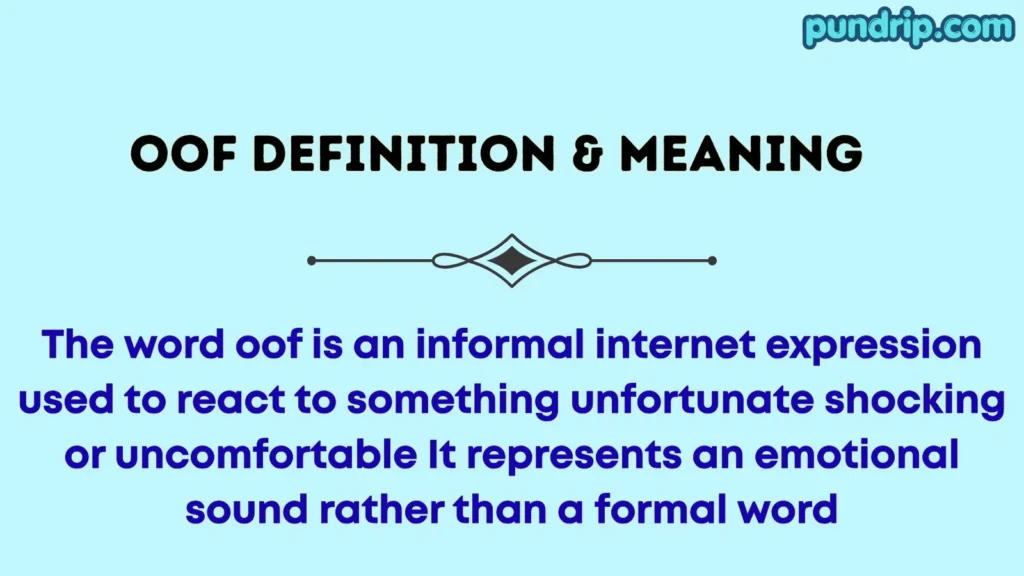
The word “oof” is an informal internet expression used to react to something unfortunate, shocking, or uncomfortable. It represents an emotional sound rather than a formal word.
In text communication, “oof” usually means:
- “That hurts”
- “That’s awkward”
- “I feel bad for that”
- “That’s unfortunate”
It is often used as a quick reaction instead of a full sentence. The meaning depends heavily on tone and context. For example:
- “I failed the exam.” → “oof”
- “I just got rejected.” → “oof big time”
Background & History
The origin of “oof” is commonly traced back to gaming culture, especially older video games where characters made a sound like “oof” when they were hit or defeated. Over time, this sound became a meme and evolved into internet slang.
The term gained massive popularity through online gaming communities, especially Roblox, where “oof” became the default sound effect for character death. From there, it spread across forums, memes, and social media platforms.
Today, it is widely used beyond gaming and has become part of mainstream internet vocabulary.
Usage in Various Contexts
“Oof” is extremely flexible and can be used in different situations:
- Empathy: “My phone broke.” → “oof”
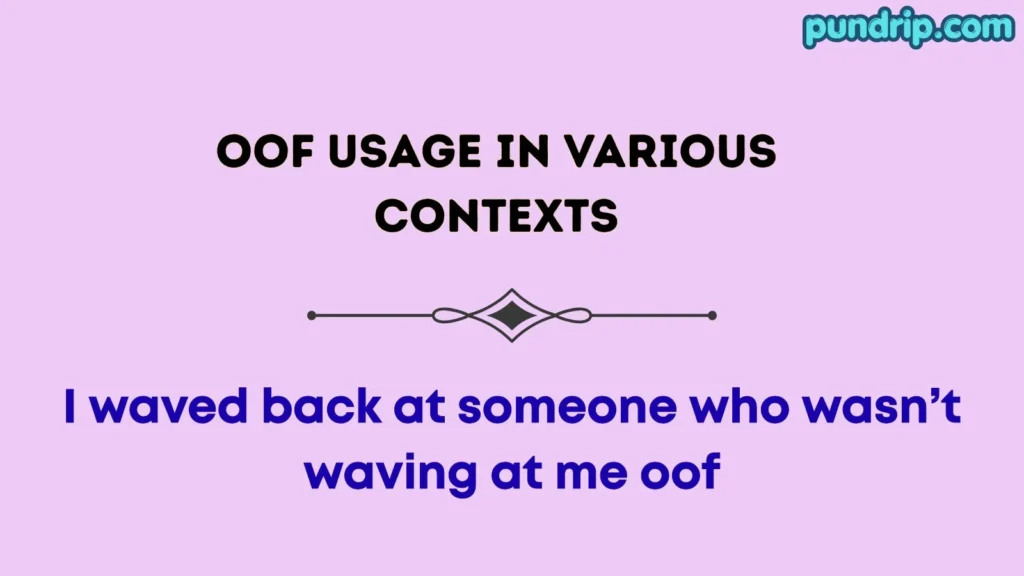
- Embarrassment: “I waved back at someone who wasn’t waving at me.” → “oof”
- Pain/Failure: “I missed the deadline.” → “oof”
- Funny reaction: “I just tripped in front of everyone.” → “oof lol”
It can also be intensified:
- “big oof”
- “mega oof”
- “oof size large”
Common Misconceptions & Clarifications
A common misconception is that “oof” always means something negative or rude. In reality, it is usually a light-hearted or sympathetic reaction.
Another misunderstanding is that it is an insult. However, in most online conversations, it is used to show empathy or shared discomfort rather than criticism.
Some people also think it has a fixed meaning, but its interpretation depends entirely on context.
Similar Terms & Alternatives
Several slang words carry similar meaning to “oof,” including:
- “ouch” (for pain or sympathy)
- “yikes” (for awkward or uncomfortable situations)
- “bruh” (for disappointment or disbelief)
- “rip” (for loss or failure)
- “dang” (for surprise or regret)
Each has slightly different emotional tones but can be used in similar contexts.
How to Respond to This Term
Responding to “oof” depends on the situation:
- If someone shares bad news, you can reply: “Yeah, that’s rough.”
- If it’s casual humor: “lol yeah”
- If it’s serious: “Sorry to hear that”
Sometimes no response is needed, as “oof” itself is already a complete reaction.
Regional or Cultural Differences
“Oof” is primarily an English internet slang term, but it is widely understood across global online communities due to memes and gaming culture.
In South Asian countries, including Pakistan and India, users often adopt “oof” in chats even when speaking local languages like Urdu or Hindi. It has become part of mixed digital communication styles.
Different regions may interpret it slightly differently, but the emotional meaning remains consistent.
Comparison with Similar Terms
Compared to other slang:
- “oof” = emotional reaction (neutral, flexible)
- “ouch” = physical or emotional pain
- “yikes” = awkward or cringe moment
- “bruh” = disbelief or frustration
“Oof” is more universal and less judgmental, making it widely usable in different contexts.
Usage in Online Communities & Dating Apps
On platforms like Discord, Reddit, TikTok, and gaming chats, “oof” is extremely common as a quick reaction.
In dating apps, it may appear in casual conversations to react to funny or awkward stories. However, it is generally informal and should be used carefully depending on the tone of the conversation.
It is best suited for relaxed, friendly environments rather than serious discussions.
Hidden or Offensive Meanings
In most cases, “oof” has no offensive meaning. However, tone matters. If used repeatedly or sarcastically, it can sometimes sound dismissive.
There are no hidden vulgar meanings associated with the word itself, making it relatively safe in digital communication.
Suitability for Professional Communication
“Oof” is not suitable for professional or formal communication such as emails, business chats, or academic writing.
In workplace settings, it may be seen as unprofessional or too casual. Instead, use alternatives like:
- “That’s unfortunate”
- “I understand”
- “That’s concerning”
FAQs:
What does oof mean in text messages?
It is a reaction word used to express sympathy, surprise, or discomfort.
Is oof a negative word?
Not always. It can be humorous, empathetic, or neutral depending on context.
Where did oof come from?
It originated from gaming culture and became popular through internet memes.
Can I use oof in formal writing?
No, it is considered informal slang and not suitable for professional communication.
What is a big oof?
It means a stronger or more serious reaction to something unfortunate or embarrassing.
Is oof still popular today?
Yes, it is still widely used in memes, chats, and social media conversations.
Conclusion:
Understanding “oof meaning in text” helps you navigate modern digital communication more effectively.
It is a simple yet powerful slang term used to express emotional reactions such as sympathy, awkwardness, or disappointment.
Originating from gaming culture, it has now become a global internet expression used across social media platforms and casual conversations.
While it is perfect for informal chats, it should be avoided in professional settings. Its versatility, simplicity, and emotional clarity are what make “oof” one of the most recognizable internet slang terms today.