In today’s fast-moving digital world, short forms and abbreviations are widely used in texting, social media, and chat apps. One such commonly seen abbreviation is “WYB”. Many people search for WYB meaning in text because it often appears in messages from friends, dating apps, or social platforms without clear context.
WYB is usually used in casual conversations, and its meaning can change slightly depending on the situation. Most commonly, it stands for “What You Been” or more naturally “What you been up to?”, but in some contexts, it can also mean “Where You Been?” or even “What You Busy?” depending on how the sender uses it.
Because texting culture is evolving quickly, understanding abbreviations like WYB helps avoid confusion and improves communication. It is especially common among younger users and in informal online chats.
Definition & Meaning
WYB in text language is an informal abbreviation used in digital communication. The most accepted meaning is “What you been (doing)?” or “Where you been?” It is typically used to ask someone what they have been doing or why they have been inactive or absent.
In simple terms, WYB is a casual way of checking in on someone. Instead of writing a full sentence like “Where have you been?” people shorten it to WYB to save time and keep conversations quick.
It is important to understand that WYB is not a formal expression. It is mainly used in texting, social media messaging, and casual online interactions rather than professional communication.
Background & History
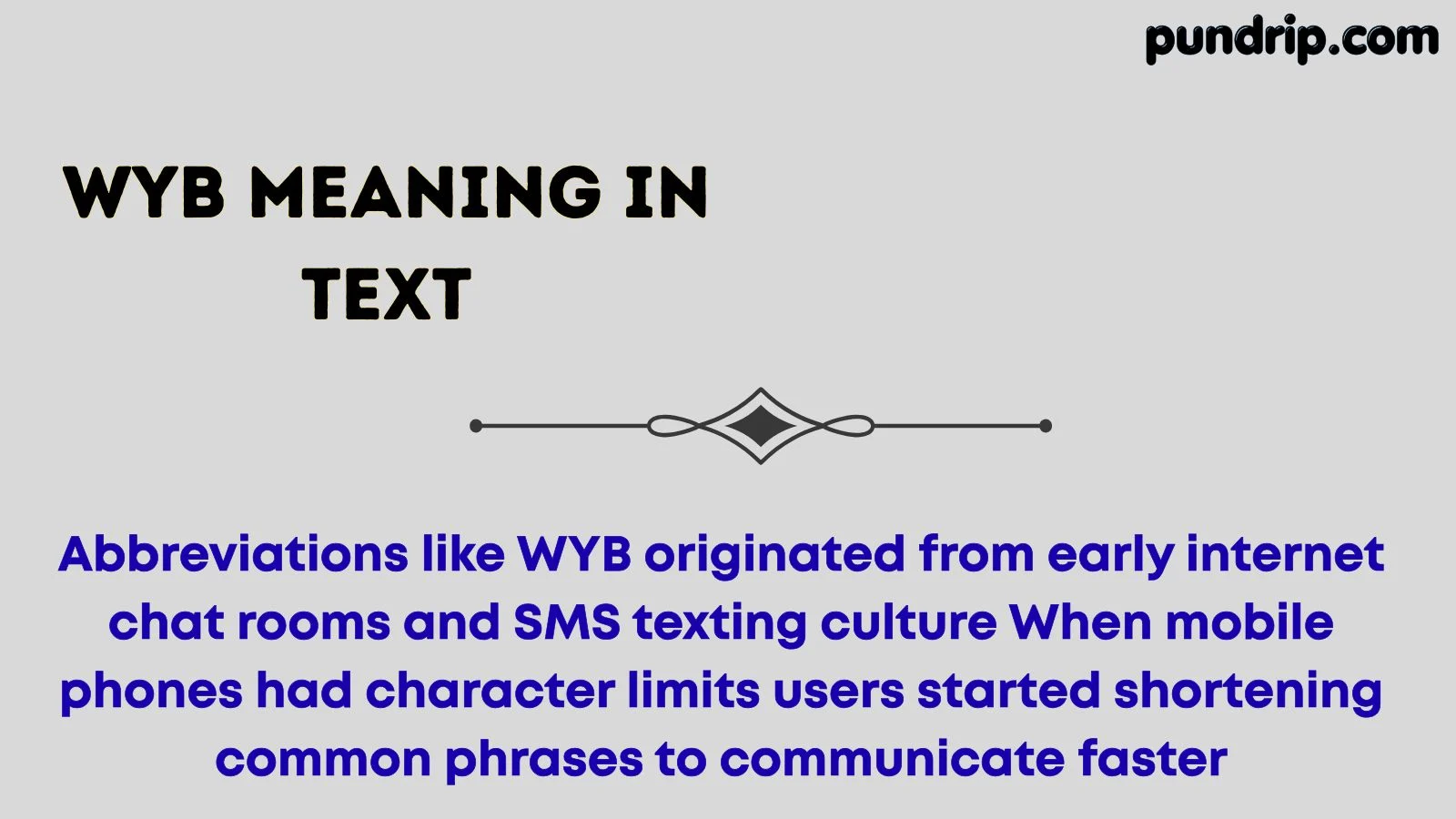
Abbreviations like WYB originated from early internet chat rooms and SMS texting culture. When mobile phones had character limits, users started shortening common phrases to communicate faster.
Over time, this habit became part of online language. Words like “LOL”, “BRB”, and “WYB” became standard in digital conversations. WYB gained popularity through messaging apps like WhatsApp, Snapchat, and Instagram DMs, where quick responses are common.
Today, WYB is widely recognized among internet users, especially in informal communication.
Usage in Various Contexts
WYB can be used in different situations depending on tone and intent:
- Friendly check-in: “WYB bro? Haven’t seen you in days.”
- Casual conversation starter: “Hey WYB these days?”
- Flirty chat on dating apps: “WYB? You disappeared 😄”
- Concerned message: “WYB? Everything okay?”
The tone depends on relationship and context. It is mostly used in informal chats between friends or acquaintances.
Common Misconceptions & Clarifications
A common misconception is that WYB has a single fixed meaning. In reality, it can vary depending on context. Some people think it is always “What you been,” while others interpret it as “Where you been.”
Another confusion is that WYB is formal or professional—it is not. It should never be used in official emails or workplace communication.
Similar Terms & Alternatives
WYB has several similar abbreviations used in texting:
- WYA (Where You At?)
- WYD (What You Doing?)
- HBU (How About You?)
- SUP (What’s Up?)
These terms are often interchangeable depending on conversation style.
How to Respond to This Term
If someone texts you WYB, your response depends on context:
- Simple reply: “Just working, WYB?”
- Casual update: “Not much, just chilling at home.”
- Friendly return question: “All good, what about you?”
The best responses are short and natural, matching the informal tone.
Regional or Cultural Differences
WYB is mostly used in English-speaking online communities. However, its usage is more common among younger users worldwide due to social media influence.
In some regions, people may not understand it and prefer full sentences instead. Cultural communication styles also affect whether abbreviations like WYB are widely accepted.
Comparison with Similar Terms
Compared to other abbreviations:
- WYD focuses on current activity
- WYB focuses on past absence or check-in
- WYA focuses on location
So WYB is more about reconnecting after some time of no contact.
Usage in Online Communities & Dating Apps
WYB is very common in dating apps and social media chats. People use it to restart conversations or check why someone stopped replying.
Example:
“Hey WYB? You stopped replying 😅”
It helps keep conversations casual and less formal, making it easier to reconnect.
Hidden or Offensive Meanings
WYB does not have any widely recognized offensive meaning. However, tone matters. If used in a sarcastic or aggressive way, it can sound rude.
Example:
“WYB? You ignoring me?” (can sound accusatory depending on tone)
So interpretation depends heavily on context and punctuation.
Suitability for Professional Communication
WYB is not suitable for professional or formal communication. It should be avoided in:
- Emails
- Business messages
- Academic writing
- Workplace communication
Instead, use full sentences like:
“Where have you been recently?”
FAQs:
What does WYB mean in text?
WYB usually means “Where you been?” or “What you been doing?”
Is WYB formal or informal?
WYB is strictly informal and used in casual texting only.
Can WYB be used in work chats?
No, it is not appropriate for professional communication.
Is WYB the same as WYD?
No, WYD means “What you doing,” while WYB refers to past absence or activity.
Why do people use WYB in chats?
People use it to quickly check in on someone in a casual way.
Does WYB have any negative meaning?
Not usually, but tone can make it sound rude or sarcastic.
Conclusion:
WYB meaning in text is a simple but flexible abbreviation used in informal digital communication. It mainly asks about someone’s recent activity or absence and is widely used in texting, social media, and casual chats.
While it is helpful for quick conversations, it should be avoided in formal communication. Understanding abbreviations like WYB helps improve online communication and prevents misunderstandings in everyday digital interactions.