In today’s fast-moving digital world, text slang evolves almost daily, leaving many people confused by unfamiliar abbreviations.
One such term that often raises eyebrows is “DPWM.” If you’ve seen it in messages, social media, or online chats, you’re not alone in wondering what it means.
People search for this term because its interpretation can vary depending on context—and sometimes, it carries a tone that isn’t immediately obvious.
Understanding texting slang like DPWM is important for clear communication, especially when tone and intent can easily be misunderstood.
Whether you’re chatting with friends, navigating online communities, or exploring dating apps, knowing what DPWM means can help you respond appropriately and avoid awkward situations.
Definition & Meaning
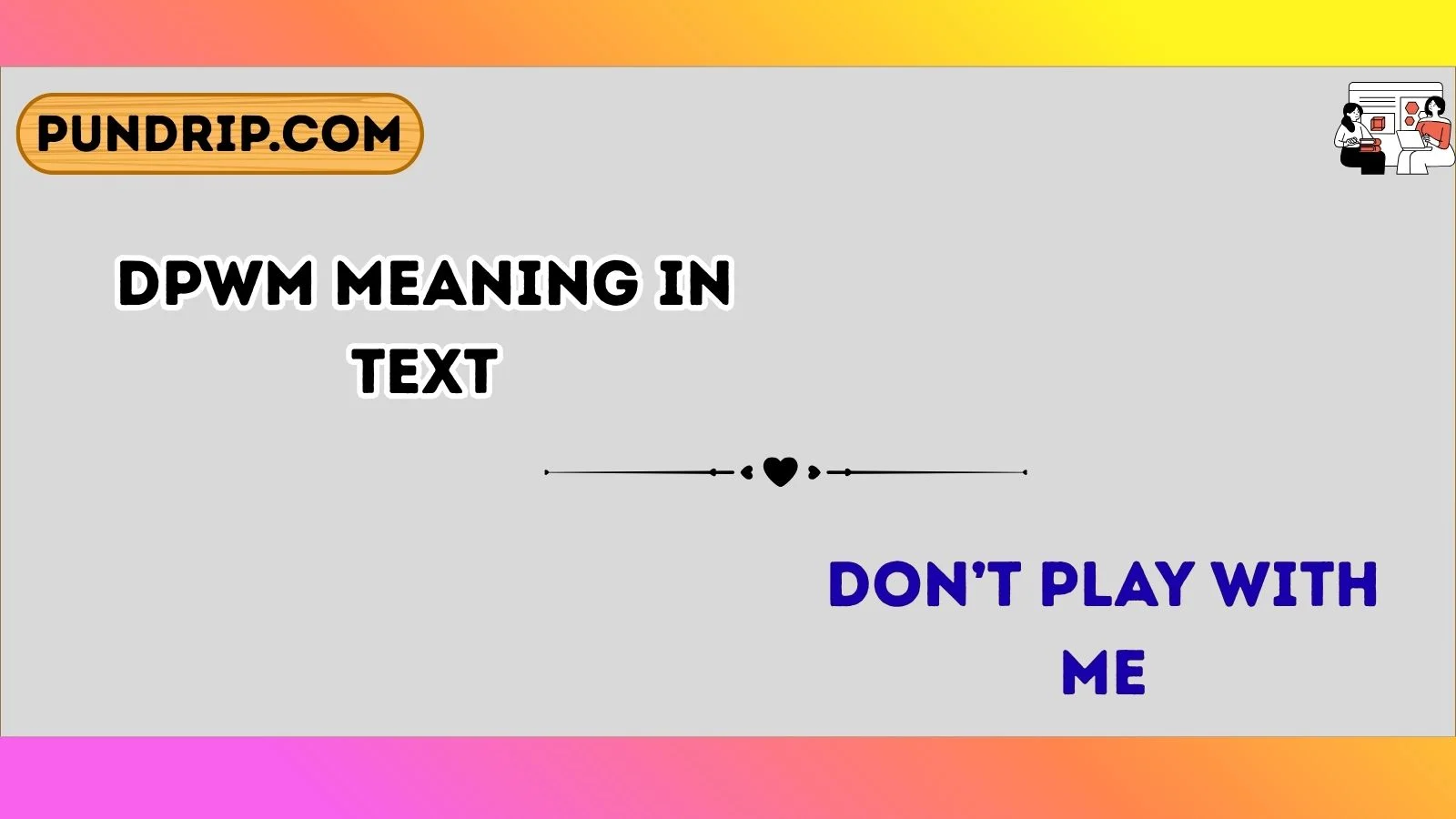
DPWM is a shorthand acronym commonly used in texting and online messaging. It typically stands for “Don’t Play With Me.” The phrase is used to express seriousness, frustration, or a warning, depending on the tone of the conversation.
When someone uses DPWM, they’re often signaling that they are not joking or that they want the other person to take them seriously. It can come across as assertive, defensive, or even slightly aggressive. For example:
- “I told you already, DPWM.”
- “You think I’m lying? DPWM.”
The tone behind DPWM depends heavily on context. In casual conversations, it might be playful or teasing, while in more serious exchanges, it can signal annoyance or a firm boundary.
It’s important to note that DPWM is informal slang and is primarily used in personal communication rather than formal settings. Misinterpreting it can lead to confusion, so understanding the surrounding message is key to grasping its true meaning.
Background & History
Like many internet abbreviations, DPWM doesn’t have a clearly documented origin. It emerged organically from online conversations, particularly within texting culture and social media platforms.
The phrase “Don’t play with me” has long been part of spoken language, often used to convey seriousness or warning. As texting became more popular, users began shortening common phrases into acronyms to save time and effort. DPWM is a natural result of that trend.
The rise of platforms like messaging apps, forums, and social networks accelerated the spread of such abbreviations. Younger audiences, in particular, adopted DPWM as part of their digital vocabulary. Over time, it became recognizable across different online spaces, although it remains less common than widely known acronyms like “LOL” or “OMG.”
Its usage continues to evolve, with slight variations in tone depending on cultural and social contexts.
Usage in Various Contexts
DPWM can appear in a variety of conversations, and its meaning shifts slightly based on context.
In casual chats, it might be used jokingly among friends:
- “You ate my snacks again? DPWM 😂”
In arguments or serious discussions, it becomes more direct and firm:
- “I’m serious about this, DPWM.”
On social media, it may appear in captions or comments to emphasize authenticity or frustration.
In gaming or competitive environments, it can signal confidence or a challenge:
- “You think you can beat me? DPWM.”
Because tone is hard to read in text, DPWM can sometimes be misunderstood. What one person intends as playful could be taken as confrontational by another.
Common Misconceptions & Clarifications
One common misconception is that DPWM always carries a negative or aggressive tone. While it can sound harsh, it’s not always meant to offend. In friendly conversations, it can simply be a playful exaggeration.
Another misunderstanding is assuming DPWM has multiple fixed meanings. While variations may exist, “Don’t Play With Me” is by far the most widely accepted interpretation.
Some people also confuse it with unrelated acronyms, leading to miscommunication. Clarifying context is always the safest approach when unsure.
Similar Terms & Alternatives
DPWM is part of a broader group of expressions used to emphasize seriousness or frustration. Similar phrases include:
- “I’m not joking”
- “Be serious”
- “Don’t mess with me”
- “I mean it”
Other acronyms with a similar tone include:
- “FR” (For Real)
- “ONG” (On God)
These alternatives can sometimes be less intense, depending on how they’re used.
How to Respond to This Term
Responding to DPWM depends on the situation and tone.
If it’s playful, you can reply casually:
- “Relax, I’m just kidding!”
If it’s serious, acknowledge the message:
- “Okay, I understand.”
If it feels confrontational, it’s best to stay calm and clarify:
- “I didn’t mean it that way.”
Reading the emotional tone behind the message is key to choosing the right response.
Regional or Cultural Differences
While DPWM is widely understood in English-speaking online communities, its usage can vary by region. In some cultures, direct expressions like this may seem more aggressive, while in others, they’re considered normal conversational emphasis.
In multilingual communities, DPWM might be mixed with other languages, making interpretation slightly more complex. Cultural context plays a big role in how it’s perceived.
Comparison with Similar Terms
Compared to softer phrases like “I’m serious,” DPWM carries a stronger emotional weight. It’s closer in tone to “Don’t mess with me,” which can sound more intense.
However, unlike explicit threats or insults, DPWM usually stays within the boundaries of assertive communication. It’s more about emphasizing sincerity than causing harm.
Usage in Online Communities & Dating Apps
In online communities, DPWM is often used to highlight authenticity or express strong opinions. It can add emphasis in debates or discussions.
On dating apps, it might appear in bios or chats to signal confidence or seriousness, such as:
- “Looking for something real, DPWM.”
However, overuse in these settings can come across as overly intense, so balance is important.
Hidden or Offensive Meanings
DPWM itself is not inherently offensive, but its tone can sometimes feel aggressive. In certain contexts, it may be interpreted as confrontational or rude, especially if used repeatedly or without clear intent.
There are no widely recognized hidden meanings beyond its standard interpretation, but as with any slang, context determines how it’s received.
Suitability for Professional Communication
DPWM is not suitable for professional settings. It’s informal and can easily be misinterpreted as rude or unprofessional.
In workplace communication, it’s better to use clear and respectful language, such as:
- “Please take this seriously”
- “I want to clarify something important”
Keeping communication professional ensures clarity and avoids unnecessary tension.
FAQs:
What does DPWM mean in texting?
It usually means “Don’t Play With Me,” expressing seriousness or emphasis.
Is DPWM rude?
It can sound rude depending on tone, but it’s not always intended that way.
Can DPWM be used jokingly?
Yes, friends often use it playfully in casual conversations.
Is DPWM common slang?
It’s moderately common but less widespread than popular acronyms like LOL.
Should I use DPWM at work?
No, it’s informal and not appropriate for professional communication.
How do I reply to DPWM?
Respond based on tone—casual if playful, respectful if serious.
Conclusion:
DPWM is a modern texting abbreviation that reflects how language continues to evolve in digital communication.
While it primarily means “Don’t Play With Me,” its tone can range from playful to serious depending on context.
Understanding how and when to use it helps prevent misunderstandings and keeps conversations smooth.
As with most slang, the key is knowing your audience and choosing your words carefully.