In today’s fast-paced digital conversations, abbreviations and slang evolve rapidly. One such term that often leaves people confused is “IMU.”
Whether you’ve seen it in a chat, text message, or on social media, understanding its meaning can help you avoid awkward misunderstandings. People frequently search for this phrase because its interpretation can vary depending on the context, tone, and platform where it’s used.
“IMU” might look simple, but it carries emotional and conversational nuances that are not always obvious at first glance.
In some cases, it expresses feelings, while in others, it’s just a casual shorthand. Knowing when and how to interpret it correctly can improve communication, especially in informal digital interactions.
Definition & Meaning
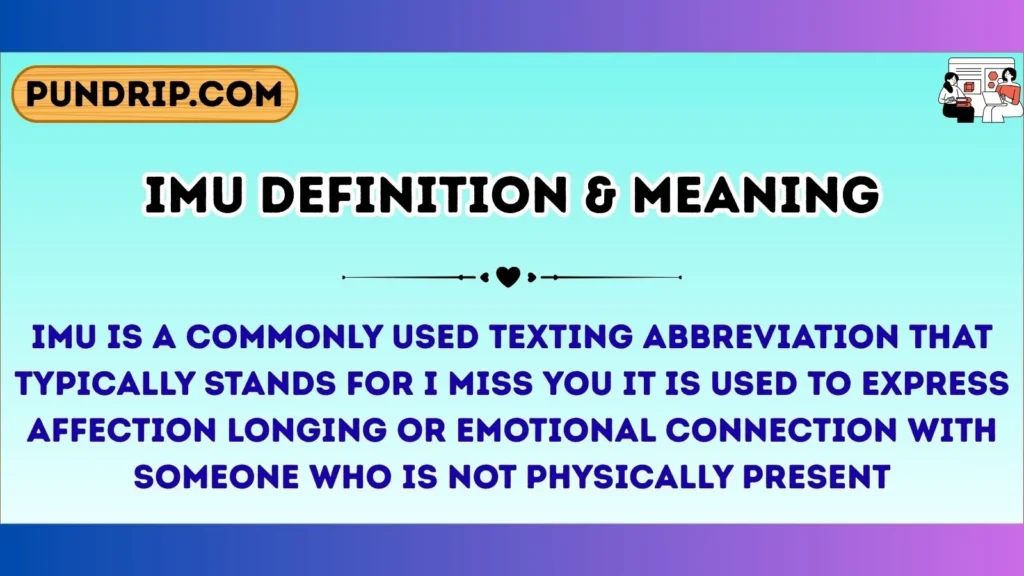
“IMU” is a commonly used texting abbreviation that typically stands for “I Miss You.” It is used to express affection, longing, or emotional connection with someone who is not physically present. The phrase is often sent between friends, romantic partners, or family members to communicate that someone is being thought about.
Unlike longer expressions, “IMU” keeps things brief and convenient, making it perfect for quick messages. Despite its simplicity, the emotional weight behind it can vary. For example, it can be heartfelt and sincere when sent to a loved one, or light and casual when used among friends.
However, context plays a critical role. While “IMU” most often means “I Miss You,” it can occasionally have alternative interpretations depending on the conversation. Some people may use it jokingly, sarcastically, or even as a way to reopen communication after a gap.
Tone also matters. A simple “IMU” without emojis or additional words may feel neutral, while adding elements like hearts or exclamation marks can make it more expressive.
Understanding the intent behind the message requires paying attention to your relationship with the sender, the conversation history, and the overall communication style.
Background & History
The abbreviation “IMU” emerged as part of early internet and SMS culture when character limits and typing speed influenced how people communicated. During the early days of mobile texting, users relied heavily on shorthand to save time and space. This led to the creation of widely recognized abbreviations like “LOL,” “BRB,” and eventually “IMU.”
As messaging platforms evolved—from SMS to instant messaging apps and social media—the use of abbreviations continued, but their purpose shifted slightly. Instead of just saving space, they became part of a casual, conversational tone that defines modern digital communication.
“IMU” gained popularity because it captures an emotional message in just three letters. It fits perfectly into quick chats where users want to express feelings without writing a full sentence.
Over time, its usage expanded across platforms like messaging apps, online forums, and social media comments. Despite the rise of voice notes and video calls, text-based expressions like “IMU” remain widely used because they are simple, direct, and easy to understand.
Interestingly, newer generations continue to adopt and adapt such abbreviations, sometimes blending them with emojis or other slang, keeping them relevant even as communication styles evolve.
Usage in Various Contexts
“IMU” can be used in several different contexts, and its meaning may slightly shift depending on the situation.
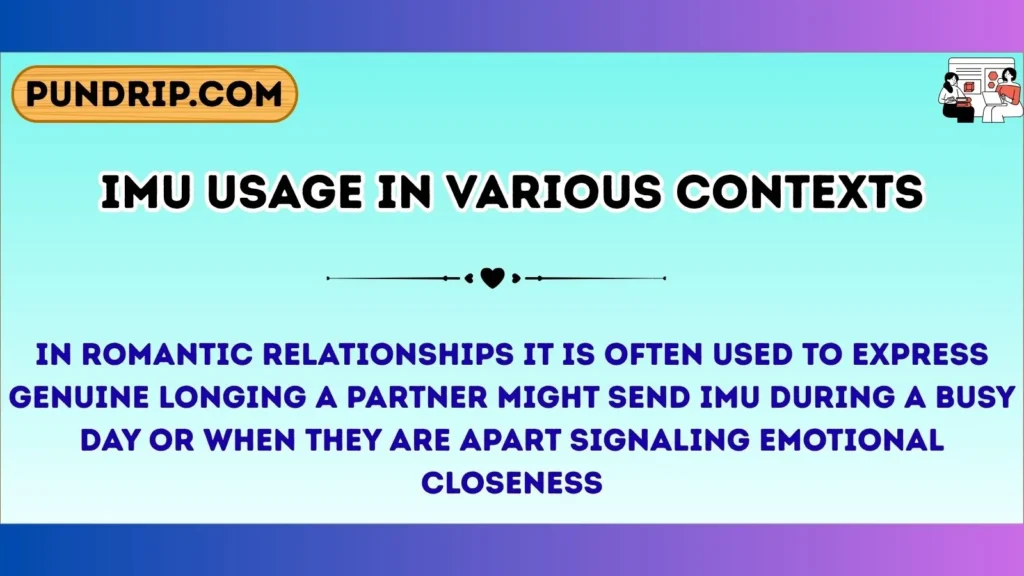
In romantic relationships, it is often used to express genuine longing. A partner might send “IMU” during a busy day or when they are apart, signaling emotional closeness.
Among friends, it tends to be more casual. It can mean “I haven’t seen you in a while” or “We should catch up soon.” The emotional intensity is usually lighter compared to romantic use.
In family conversations, it may carry warmth and affection, especially when members live far apart. Parents, siblings, or relatives may use it to maintain emotional bonds.
On social media, “IMU” can sometimes be used publicly in posts or comments. In these cases, it may be directed at a person, a group, or even a memory or past experience.
In gaming or online communities, it can occasionally be used humorously or sarcastically, depending on the tone of the conversation.
The key to understanding its meaning lies in context. The same abbreviation can feel deeply emotional in one situation and completely casual in another.
Common Misconceptions & Clarifications
One of the biggest misconceptions about “IMU” is that it always carries deep emotional weight. While it often means “I Miss You,” not every use is serious or heartfelt. Sometimes, people use it casually without strong emotional intent.
Another misunderstanding is assuming it has a fixed meaning in every situation. In reality, digital slang is flexible, and interpretations can vary. For example, some users might mistake it for a different abbreviation or assume it has a hidden meaning when it doesn’t.
There’s also confusion between “IMU” and similar-looking abbreviations. Because texting language evolves quickly, people may mix up meanings or interpret them incorrectly.
Additionally, tone is often lost in text messages. Without vocal cues or facial expressions, “IMU” can sometimes be misread. A simple message might seem distant or overly emotional depending on the reader’s perspective.
Clarifying intent through follow-up messages or emojis can help avoid misunderstandings.
Similar Terms & Alternatives
There are several alternatives to “IMU” that convey similar meanings, each with slightly different tones.
“I miss you” (full phrase) is the most direct and emotionally clear option. It feels more personal and intentional compared to the abbreviation.
“Miss u” is another common variation, blending casual tone with clarity.
Other related expressions include:
- “Thinking of you”
- “Wish you were here”
- “Come back soon”
Each alternative offers a different level of emotional intensity. Some are more formal, while others remain casual.
Choosing the right phrase depends on your relationship with the recipient and the message you want to convey.
How to Respond to This Term
Responding to “IMU” depends on your feelings and the context of the message.
If you feel the same way, you can reply with:
- “IMU too”
- “I miss you more”
- “Same here”
If you want to keep things light, a simple:
- “Aww, that’s sweet”
- “We should meet soon”
works well.
If you’re unsure about the tone, it’s okay to respond neutrally and keep the conversation going.
However, if the message feels unexpected or uncomfortable, you can respond politely without encouraging further emotional depth.
The key is to match your response with your comfort level and the nature of your relationship.
Regional or Cultural Differences
The use of “IMU” is generally consistent across English-speaking communities, but cultural differences can influence how it’s perceived.
In some cultures, expressing emotions openly—even in text—is common and appreciated. In others, such expressions may feel too direct or personal, especially in casual relationships.
Language barriers can also affect interpretation. Non-native English speakers might not immediately recognize the abbreviation or may interpret it literally without understanding the emotional nuance.
Additionally, younger generations tend to use such abbreviations more frequently, while older users may prefer full phrases.
Understanding these differences can help avoid miscommunication in diverse conversations.
Comparison with Similar Terms
“IMU” is often compared with other abbreviations that express emotions or maintain conversation flow.
For example:
- “ILY” (I love you) carries a much stronger emotional weight.
- “TTYL” (talk to you later) is more about ending a conversation.
- “BRB” (be right back) is purely functional.
Compared to these, “IMU” sits somewhere in the middle—it’s emotional but not overly intense.
This makes it versatile, as it can be used in both close relationships and casual conversations.
Usage in Online Communities & Dating Apps
In online communities and dating apps, “IMU” can have slightly different implications.
On dating platforms, it may signal growing interest or emotional attachment. However, its sincerity depends on the stage of the relationship.
In online communities, it is often used casually or humorously. For example, users might say “IMU” to someone who hasn’t been active for a while.
Because online interactions can sometimes lack authenticity, it’s important to consider the context and consistency of communication before interpreting it too deeply.
Hidden or Offensive Meanings
Generally, “IMU” does not have offensive meanings. It is considered a safe and positive expression.
However, like any text-based communication, its tone can be misunderstood. In rare cases, it may feel insincere or manipulative if used repeatedly without genuine intent.
There are no widely recognized hidden or inappropriate meanings associated with this abbreviation.
Suitability for Professional Communication
“IMU” is not suitable for professional or formal communication. In workplace settings, it is better to use clear and complete language.
For example, instead of using abbreviations, you might say:
- “It’s been a while since we last connected.”
- “I look forward to speaking with you again.”
Professional communication values clarity, respect, and formality, which abbreviations like “IMU” do not provide.
Using it in a professional context may come across as too casual or unprofessional.
FAQs:
What does IMU mean in texting?
It usually means “I Miss You.”
Is IMU always romantic?
No, it can be used for friends and family too.
Can IMU have different meanings?
Mostly it means “I Miss You,” but context can slightly change tone.
Is IMU appropriate for work messages?
No, it’s too casual for professional use.
How do I reply to IMU?
You can say “IMU too” or respond based on your feelings.
Do people still use IMU today?
Yes, it remains common in casual digital conversations.
Conclusion:
“IMU” is a simple yet meaningful abbreviation that plays an important role in modern texting culture. While it most commonly stands for “I Miss You,” its true meaning depends heavily on context, tone, and the relationship between individuals.
Understanding how and when to use it and how to respond can make your digital communication more effective and emotionally accurate.
By paying attention to subtle cues, you can avoid misunderstandings and connect more naturally with others in online conversations.

I’m Mike Johnson the creative mind behind Pundrip a space where humor meets imagination and words come alive with personality. I’ve always believed that laughter isn’t just entertainment, it’s a connection. That belief is what inspired me to build a platform dedicated to clever puns, witty wordplay, and content that sparks genuine smiles. My journey started with a simple love for language the way a single word can twist, surprise, and delight. Over time, that curiosity turned into a passion for creating content that feels fresh, original, and full of energy. With Pundrip, my goal is to give readers a place they can visit anytime they need a quick laugh, a spark of creativity, or just a break from the ordinary.