In today’s fast-moving digital world, slang terms evolve quickly, and new abbreviations appear almost daily.
One such term that often raises curiosity is “DTF.” Many people search for it because they’ve seen it in chats, social media, or dating apps and aren’t sure what it means or how to respond.
Understanding modern text slang is important not just for staying updated, but also for avoiding awkward or uncomfortable situations.
“DTF” is a term that can carry different tones depending on context, audience, and platform. While it may seem like just another casual abbreviation, its meaning can be bold, direct, and sometimes inappropriate depending on how it’s used.
Definition & Meaning
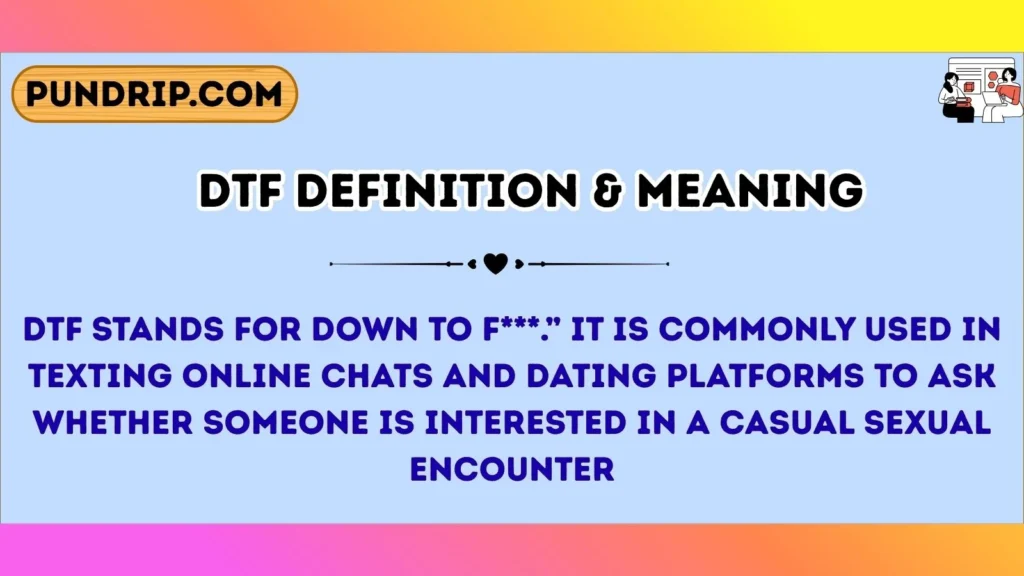
“DTF” stands for “Down To F***.” It is commonly used in texting, online chats, and dating platforms to ask whether someone is interested in a casual sexual encounter. The phrase is direct and often implies a no-strings-attached situation.
In simpler terms, when someone uses this abbreviation, they are usually asking if the other person is open to physical intimacy without emotional commitment. Because of its explicit nature, it is considered informal and sometimes inappropriate, especially outside casual or adult contexts.
However, like many slang terms, its tone can vary slightly. Some people may use it jokingly among close friends, while others use it seriously in dating conversations. The intention behind the message often depends on the relationship between the people involved and the platform where it appears.
Understanding the meaning helps you avoid confusion and respond appropriately. If you’re unsure about the tone, it’s always best to interpret it cautiously, as it can easily cross personal boundaries.
Background & History
The term “DTF” became widely popular in the early 2010s, especially with the rise of online dating culture and reality television. It gained mainstream attention through pop culture references, where casual relationships and bold communication styles became more visible and normalized.
Before abbreviations like this, people used longer phrases to express similar intentions. However, as texting and instant messaging grew, shorter forms became more common for convenience and speed. This abbreviation is part of a larger trend where users simplify language into quick, recognizable codes.
Over time, the phrase moved from niche internet slang into everyday conversations, especially among younger audiences. Social media platforms, memes, and dating apps helped spread it globally, making it recognizable even to people who may not actively use it.
Despite its popularity, it has remained somewhat controversial because of its explicit nature. Different cultures and communities have varying levels of acceptance for such direct expressions.
Usage in Various Contexts
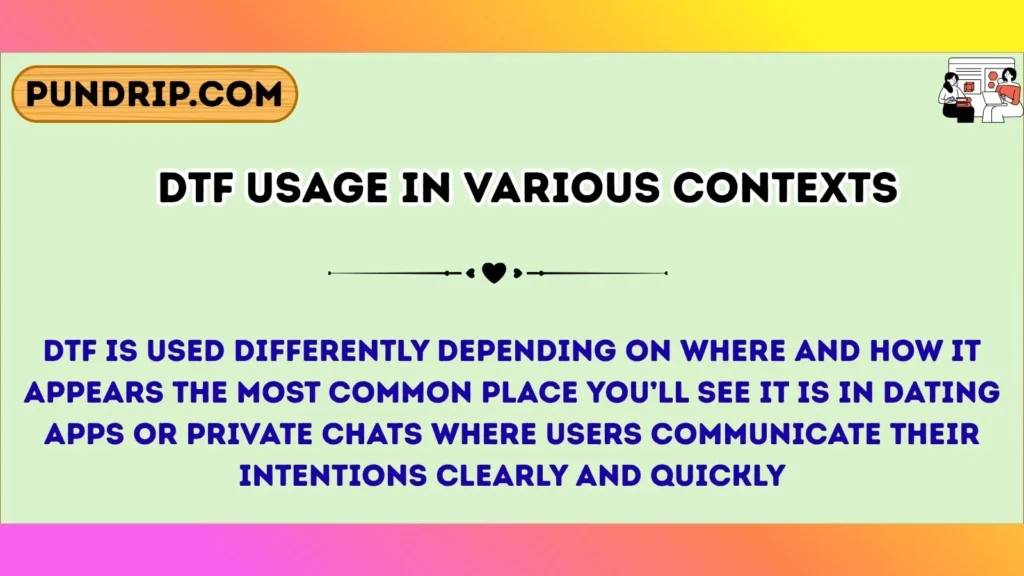
“DTF” is used differently depending on where and how it appears. The most common place you’ll see it is in dating apps or private chats, where users communicate their intentions clearly and quickly.
In casual conversations, especially among friends, it may be used humorously. For example, someone might jokingly ask if a friend is “DTF” for an activity like eating or traveling, replacing the original meaning with something harmless. In these cases, context completely changes the tone.
On social media, it can appear in captions, memes, or comments. Here, it may be used for entertainment rather than serious intent. Still, because of its original meaning, it often carries a slightly edgy or bold tone.
In professional or formal settings, this term is almost never appropriate. Using it in workplace communication can be seen as disrespectful or unprofessional.
Understanding the context is key. The same abbreviation can be playful in one situation and offensive in another.
Common Misconceptions & Clarifications
One common misconception is that “DTF” always has a humorous meaning. While it can be used jokingly, its original meaning is explicit and should not be ignored.
Another misunderstanding is that it’s acceptable in all casual conversations. In reality, not everyone is comfortable with such direct language, and using it without knowing the other person’s boundaries can lead to discomfort.
Some people also assume that it’s only used by a specific age group. While it’s more popular among younger audiences, it is widely recognized across different age ranges due to internet culture.
Clarifying these misconceptions helps ensure respectful communication and prevents unintended misunderstandings.
Similar Terms & Alternatives
There are several slang terms that carry similar meanings or intentions, though they may vary in tone and directness. Some are less explicit and more socially acceptable, while others are equally bold.
For example, phrases like “hook up,” “casual meet,” or “no-strings-attached” express similar ideas but in a softer way. These alternatives are often preferred when someone wants to communicate clearly without being overly direct.
Using alternatives can be helpful in situations where you want to maintain politeness or avoid offending someone. Choosing the right wording depends on the level of familiarity and comfort between people.
How to Respond to This Term
If someone sends you “DTF,” your response should depend on your comfort level and intentions. If you’re not interested, a simple and respectful “No, I’m not” is enough. You don’t need to explain further.
If you feel uncomfortable, you can set boundaries clearly or choose to ignore the message altogether. Protecting your comfort and safety should always come first.
If you are interested, it’s still wise to respond thoughtfully rather than impulsively. Make sure both parties understand each other’s expectations to avoid misunderstandings later.
Being direct, respectful, and honest is the best approach in any situation involving this term.
Regional or Cultural Differences
The acceptance and usage of “DTF” can vary widely across cultures and regions. In more conservative societies, the term may be seen as highly inappropriate or offensive.
In contrast, in more open or liberal cultures, it may be considered normal in casual dating conversations. However, even in such environments, it is still not suitable for formal communication.
Language and cultural norms play a major role in how such slang is perceived. What feels normal in one place may feel disrespectful in another.
Comparison with Similar Terms
Compared to other slang expressions, “DTF” is more direct and explicit. Terms like “seeing someone” or “casual dating” are more subtle and socially acceptable.
The main difference lies in tone and intention. While softer terms allow room for interpretation, this abbreviation leaves little ambiguity. That clarity can be useful in some contexts but inappropriate in others.
Choosing between direct and subtle language depends on the situation and the people involved.
Usage in Online Communities & Dating Apps
On dating platforms, “DTF” is often used to quickly communicate intentions. Some users prefer this directness because it saves time and avoids confusion.
In online communities, especially forums and meme pages, it may appear in a humorous or exaggerated way. However, its original meaning is usually understood by most users.
Because online spaces bring together people from different backgrounds, reactions to this term can vary. Some may find it normal, while others may consider it inappropriate.
Hidden or Offensive Meanings
Although “DTF” has a clear primary meaning, it can sometimes come across as disrespectful or objectifying, especially if used without context or consent.
The term may make some people feel uncomfortable because it reduces interaction to a purely physical level. This is why it’s important to use it carefully and only in appropriate situations.
Understanding its impact helps avoid unintentionally offending others.
Suitability for Professional Communication
This term is not suitable for professional or formal communication under any circumstances. Using it in a workplace or business environment can damage your reputation and may even lead to serious consequences.
Professional communication requires respectful and neutral language. Slang like this does not fit those standards and should always be avoided in such settings.
FAQs:
What does DTF mean in texting?
It means “Down To F***,” referring to interest in a casual physical relationship.
Is DTF always used seriously?
Not always. Sometimes it’s used jokingly, but the original meaning remains explicit.
Is it appropriate to use DTF with friends?
Only if there is mutual understanding and comfort; otherwise, it can be awkward.
How should I reply if I feel uncomfortable?
You can decline politely or ignore the message to maintain your boundaries.
Is DTF used on dating apps?
Yes, it’s commonly used to express direct intentions.
Can DTF be used in professional settings?
No, it is inappropriate and unprofessional in any formal environment.
Conclusion:
Understanding the meaning of “DTF” in text helps you navigate modern conversations more confidently.
While it is a widely recognized abbreviation, its direct and explicit nature makes it important to use with caution. Context, audience, and intent all play a major role in how it is perceived.
Being aware of its meaning allows you to respond appropriately, set clear boundaries, and avoid misunderstandings.
In a world where communication is fast and often informal, knowing the impact of your words is more important than ever.

I’m Michael Carter the creative mind behind Pundrip a space where words come alive, humor feels effortless, and creativity never runs dry. What started as a simple love for clever wordplay turned into a passion for building something that makes people smile, think, and come back for more. I’ve always believed that the right words can change a moment. Whether it’s a witty pun, a playful twist, or a clever line that sticks in your mind, I enjoy crafting content that feels fresh, original, and genuinely fun to read. Pundrip is more than just a website to me it’s a reflection of my personality: lighthearted, creative, and always evolving.