In today’s fast-moving digital world, short forms and slang dominate how people communicate. One such popular term is “luv,” which often appears in text messages, social media captions, and casual chats.
Many people search for its meaning because it looks similar to “love,” yet feels more relaxed and informal. Understanding this subtle difference helps avoid confusion, especially when tone and intent matter in conversations.
“Luv” is commonly used to express affection, friendliness, or emotional warmth without sounding too serious. It’s especially popular among younger users and in informal settings where quick, expressive communication is preferred.
Definition & Meaning
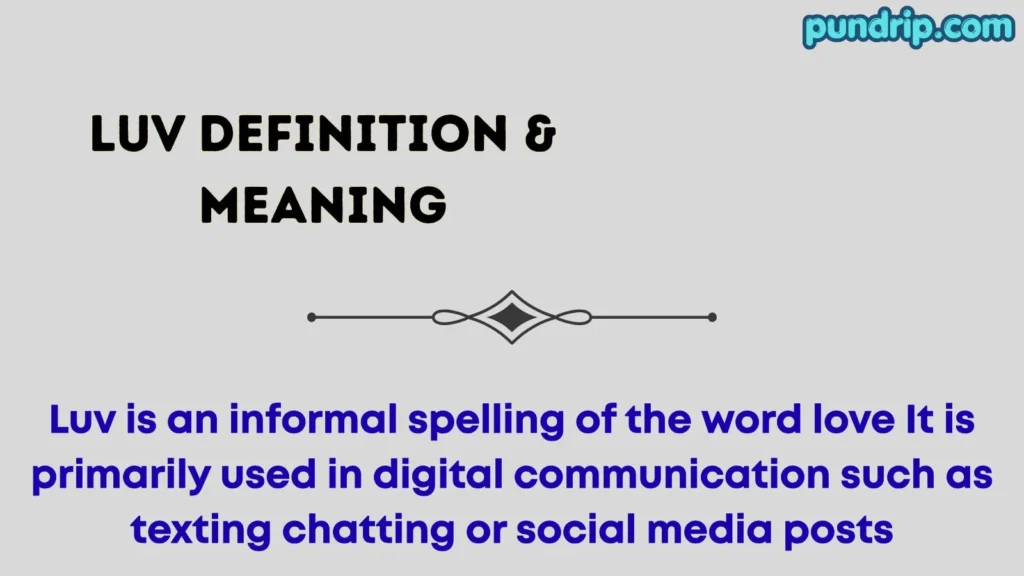
“Luv” is an informal spelling of the word “love.” It is primarily used in digital communication such as texting, chatting, or social media posts. Unlike “love,” which can carry deep emotional or romantic weight, “luv” is generally lighter, more casual, and less intense.
People use “luv” to show:
- Affection (e.g., “luv u”)
- Appreciation (e.g., “luv this song”)
- Friendly warmth (e.g., “luv ya buddy”)
The tone of “luv” depends heavily on context. Between close friends, it may simply mean “I care about you.” In romantic conversations, it can still imply love but in a softer, less formal way. It avoids the seriousness that the full word “love” sometimes brings.
Background & History
The term “luv” gained popularity with the rise of SMS texting in the late 1990s and early 2000s. During that time, character limits encouraged people to shorten words. “Love” became “luv” because it was quicker to type and felt more casual.
Over time, “luv” evolved beyond necessity and became a stylistic choice. It began appearing in:
- Chat rooms
- Early social media platforms
- Song lyrics and pop culture
Its phonetic spelling also made it appealing, as it reflects how the word sounds rather than how it is traditionally written. Today, it remains widely used, especially in informal digital conversations.
Usage in Various Contexts
“Luv” is versatile and can be used in many situations depending on tone and relationship:
1. Romantic Context
Used between partners but in a softer tone:
“Luv u, goodnight ❤️”
2. Friendship
Shows care without romantic intent:
“Miss you, luv ya!”
3. Social Media
Expressing liking or admiration:
“Luv this outfit!”
4. Family Conversations
Often used by younger family members:
“Luv u mom!”
The key is tone—“luv” reduces emotional intensity while still conveying positivity.
Common Misconceptions & Clarifications
Many people misunderstand “luv” as always meaning deep romantic love. That’s not accurate.
- It does not always imply romance
- It is not a typo; it’s intentional slang
- It is less serious than “love”
- It can be friendly, playful, or casual
Another misconception is that it lacks sincerity. In reality, it can still express genuine emotion—just in a lighter way.
Similar Terms & Alternatives
There are several alternatives to “luv” that carry similar meanings:
- Love – More formal and serious
- <3 – Symbolic expression of love
- XOXO – Hugs and kisses
- Luv ya – Casual friendly affection
- Heart emojis ❤️ – Visual expression
Each option varies in tone and intensity, allowing users to choose based on their relationship and message style.
How to Respond to This Term
When someone uses “luv,” your response should match the tone and relationship:
- Casual reply: “Luv u too!”
- Friendly reply: “Aww, same here!”
- Playful reply: “Right back at you!”
- Neutral reply: “Thanks!”
Avoid overthinking it—respond naturally based on how you feel.
Regional or Cultural Differences
The use of “luv” can vary across cultures:
- In Western countries, it is widely used in casual texting
- In South Asian regions, it is popular among younger audiences
- In British English, “luv” may also appear in speech as a friendly term
Cultural context matters. In some places, it’s seen as playful, while in others, it might feel more affectionate.
Comparison with Similar Terms
“Luv” vs “Love” is the most common comparison:
- Luv → informal, light, friendly
- Love → deeper, more serious
Compared to emojis:
- “Luv” uses words
- Emojis use visuals
Compared to abbreviations like “ily” (I love you):
- “Luv” feels softer
- “ily” can feel more direct
Usage in Online Communities & Dating Apps
On platforms like messaging apps and dating sites, “luv” plays an important role in tone:
- Used to keep conversations relaxed
- Helps avoid coming across as too intense
- Adds warmth without pressure
In dating apps, it can signal interest, but usually in a casual, non-committed way.
Hidden or Offensive Meanings
Generally, “luv” is harmless and positive. However, tone matters:
- Overuse may seem insincere
- In sarcasm, it can sound mocking
- In professional settings, it may seem unprofessional
There are no widely recognized offensive meanings, but misuse can create misunderstanding.
Suitability for Professional Communication
“Luv” is not suitable for formal or professional communication.
Avoid using it in:
- Emails
- Job applications
- Business messages
Instead, use:
- “Best regards”
- “Thank you”
- “Kind wishes”
Professional settings require clarity and formality, which “luv” does not provide.
FAQs:
What does “luv” mean in text?
It means “love” but in a casual and informal way.
Is “luv” romantic or friendly?
It can be both, depending on the context and relationship.
Is “luv” the same as “love”?
Not exactly—“luv” is lighter and less serious.
Can I use “luv” in professional messages?
No, it is too informal for professional communication.
Why do people use “luv” instead of “love”?
It feels quicker, softer, and more casual.
Is “luv u” serious?
Usually not—it’s often friendly or playful rather than deeply emotional.
Conclusion:
“Luv” is a simple yet expressive term that reflects how digital communication has evolved. It offers a softer, more casual way to show affection without the weight of the full word “love.” Whether used among friends, family, or romantic partners, its meaning depends on context, tone, and relationship.
Understanding when and how to use “luv” helps you communicate more naturally and avoid misunderstandings.
While it works perfectly in informal chats, it’s best avoided in professional settings. Like many modern slang terms, “luv” is all about balance light, friendly, and expressive without being overly serious.