If you’ve ever come across the word “ash” in a text message or social media comment and felt confused, you’re not alone. Modern texting language is full of abbreviations, slang, and shorthand expressions that evolve quickly.
One such term gaining popularity is “ash,” which may look simple but can carry different meanings depending on the context.
People search for this term because it often appears in casual chats, memes, and online conversations without explanation.
Understanding what it means helps avoid misunderstandings and improves communication, especially in informal settings like messaging apps or online communities.
Definition & Meaning
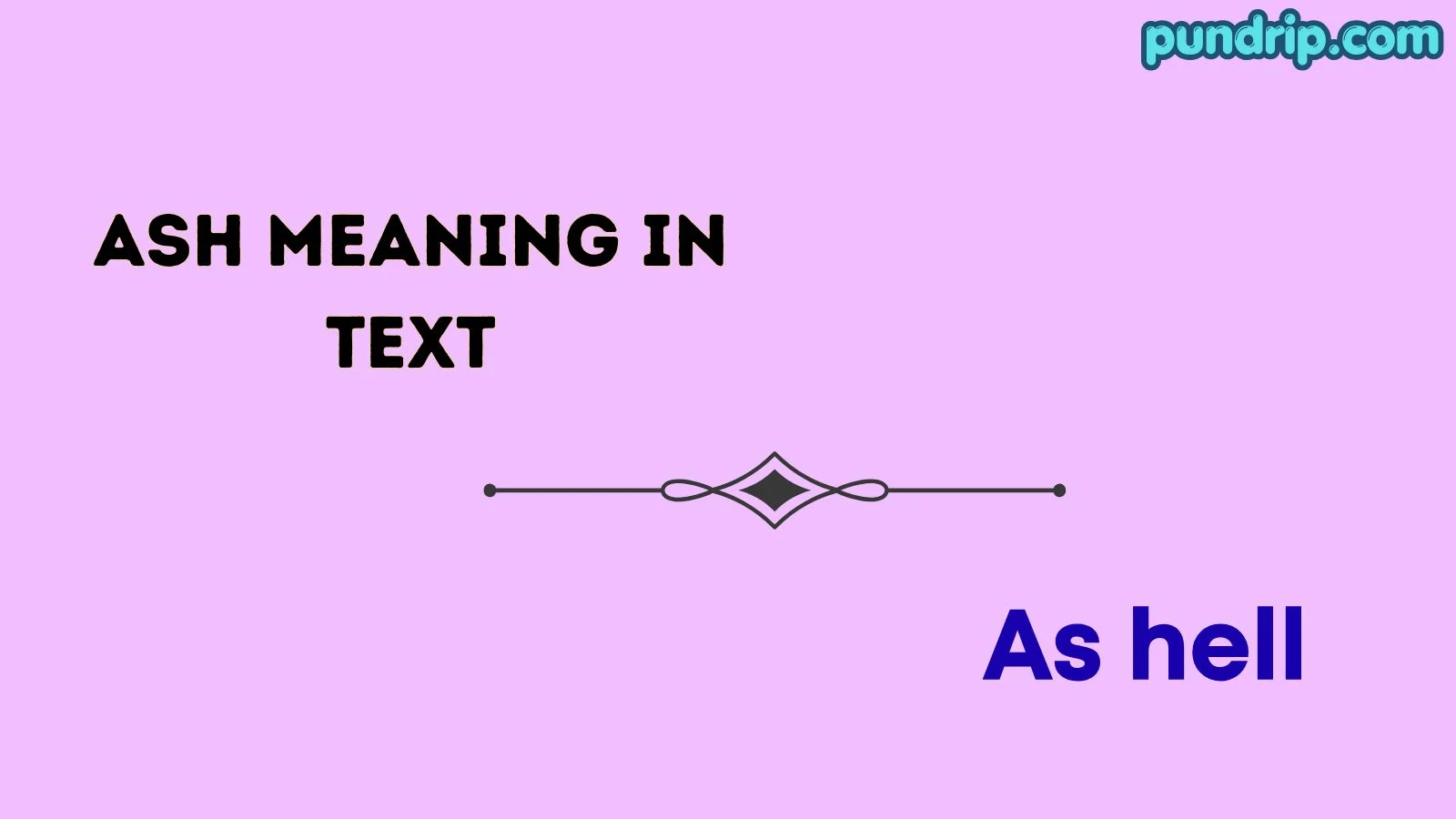
In texting and online communication, “ash” is most commonly used as a shorthand or slang expression. The meaning can vary, but the most popular interpretations include:
- “As hell” – Used to intensify a statement
Example: “I’m tired ash” = “I’m very tired” - Literal meaning (ash) – Referring to burned material or dust-like residue
Example: “The paper turned to ash” - Name or nickname – Sometimes used as a short form of names like Ashley or Ashton
Among these, the slang version meaning “as hell” is the most widely used in casual texting. It functions as an intensifier, similar to saying “very” or “extremely,” but in a more informal tone.
The meaning usually becomes clear based on the sentence structure. If it appears after an adjective, it almost always acts as emphasis.
Background & History
The slang use of “ash” as “as hell” developed from spoken language, particularly in informal communities where phrases are shortened for convenience. Over time, texting culture pushed this even further, encouraging users to type faster and more casually.
This abbreviation likely emerged from phonetic pronunciation. When people say “as hell” quickly, it can sound like “ash,” especially in certain accents. Social media platforms helped popularize this shorthand, as users began typing it the way it sounded rather than writing the full phrase.
As with many slang terms, younger audiences and online communities adopted it first. Platforms like messaging apps, comment sections, and short-form content spaces contributed to its spread. Today, it’s widely recognized in informal digital conversations.
Usage in Various Contexts
“Ash” can appear in several different contexts depending on the conversation style:
Casual Texting
Used between friends to emphasize feelings
Example: “That movie was funny ash”
Social Media Posts
Adds personality or exaggeration
Example: “I’m bored ash today”
Gaming Chats
Quick and expressive communication
Example: “That level was hard ash”
Literal Conversations
Refers to actual ash (burned substance)
Example: “There’s ash in the fireplace”
Understanding context is key. In most online situations, especially informal ones, it’s safe to assume the slang meaning unless the topic clearly refers to something physical.
Common Misconceptions & Clarifications
One common mistake is assuming “ash” always has a single meaning. In reality, it depends heavily on context.
Some people think:
- It’s a typo → Not always; often intentional slang
- It’s inappropriate → It can be mildly informal but not necessarily offensive
- It always means something negative → It can describe both positive and negative situations
Clarifying the tone of the conversation usually helps determine the correct interpretation.
Similar Terms & Alternatives
There are several alternatives people use instead of “ash”:
- “AF” (as f***)
- “Very”
- “Extremely”
- “Super”
- “So”
Among these, “AF” is closest in tone but can be considered more explicit. “Ash” is often seen as a softer or more casual alternative.
How to Respond to This Term
Responding to “ash” depends on the tone and context of the conversation.
- Agreeing:
“Yeah, same! I’m tired ash too” - Asking for clarification:
“What do you mean by ash?” - Keeping it casual:
Match the tone with similar slang
If you’re unsure, it’s okay to ask. Most people will clarify without any issue.
Regional or Cultural Differences
The use of “ash” as slang is more common in certain regions and communities, particularly in informal English-speaking environments. It may not be widely understood in more formal or non-native English contexts.
In some cultures, the term might be unfamiliar or interpreted literally. That’s why it’s important to consider your audience before using it.
Comparison with Similar Terms
Compared to other slang:
- “Ash” vs “AF”
“Ash” is softer and less explicit - “Ash” vs “Very”
“Very” is formal; “ash” is casual - “Ash” vs “So”
“So” is neutral; “ash” adds stronger emphasis
Overall, “ash” fits best in relaxed, friendly conversations.
Usage in Online Communities & Dating Apps
In online communities, “ash” is often used to sound relatable and expressive. It helps convey emotions quickly without typing full sentences.
On dating apps, it may appear in bios or chats to show personality
Example: “I’m funny ash” or “I love food ash”
However, not everyone understands it, so using it sparingly can help avoid confusion.
Hidden or Offensive Meanings
“Ash” itself is not inherently offensive. However, since it replaces “as hell,” some may consider it slightly informal or edgy depending on the setting.
It does not typically carry hidden or harmful meanings, but tone and context still matter.
Suitability for Professional Communication
Using “ash” in professional settings is not recommended. It is considered informal slang and may appear unprofessional in emails, reports, or workplace chats.
In formal communication, it’s better to use:
- “Very”
- “Highly”
- “Extremely”
Keeping language clear and professional ensures better understanding.
FAQs:
What does “ash” mean in text?
It usually means “as hell,” used to emphasize something in a casual way.
Is “ash” appropriate to use in messages?
Yes, but only in informal conversations with friends or peers.
Can “ash” have different meanings?
Yes, it can also refer to actual ash or be used as a name.
Is “ash” offensive?
Not directly, but it can sound slightly informal or edgy.
Where is “ash” commonly used?
Mostly in texting, social media, and online chats.
Should I use “ash” in professional communication?
No, it’s better to use formal words like “very” or “extremely.”
Conclusion:
Understanding the meaning of “ash” in text helps you stay in sync with modern communication trends.
While it may seem confusing at first, its most common use as a slang intensifier makes it easy to recognize once you know the context.
Like many internet expressions, it thrives in casual conversations where speed and personality matter more than formality.
However, knowing when not to use it is just as important especially in professional settings. By learning how “ash” works, you can interpret messages more accurately and communicate more naturally in today’s digital world.

I’m Mike Johnson the creative mind behind Pundrip a space where humor meets imagination and words come alive with personality. I’ve always believed that laughter isn’t just entertainment, it’s a connection. That belief is what inspired me to build a platform dedicated to clever puns, witty wordplay, and content that sparks genuine smiles. My journey started with a simple love for language the way a single word can twist, surprise, and delight. Over time, that curiosity turned into a passion for creating content that feels fresh, original, and full of energy. With Pundrip, my goal is to give readers a place they can visit anytime they need a quick laugh, a spark of creativity, or just a break from the ordinary.