In the fast-moving world of digital communication, short forms and slang dominate how people interact online.
One such term that often confuses users is “ARD.” If you’ve seen it in messages, chats, or social media comments, you might wonder what it actually means and why people use it.
Understanding this abbreviation is important because its meaning can shift depending on tone, context, and region.
People search for “ARD meaning in text” to avoid misunderstandings and respond appropriately in conversations.
Whether you’re chatting with friends, texting someone new, or navigating online communities, knowing how to interpret this term helps you communicate more naturally.
Definition & Meaning
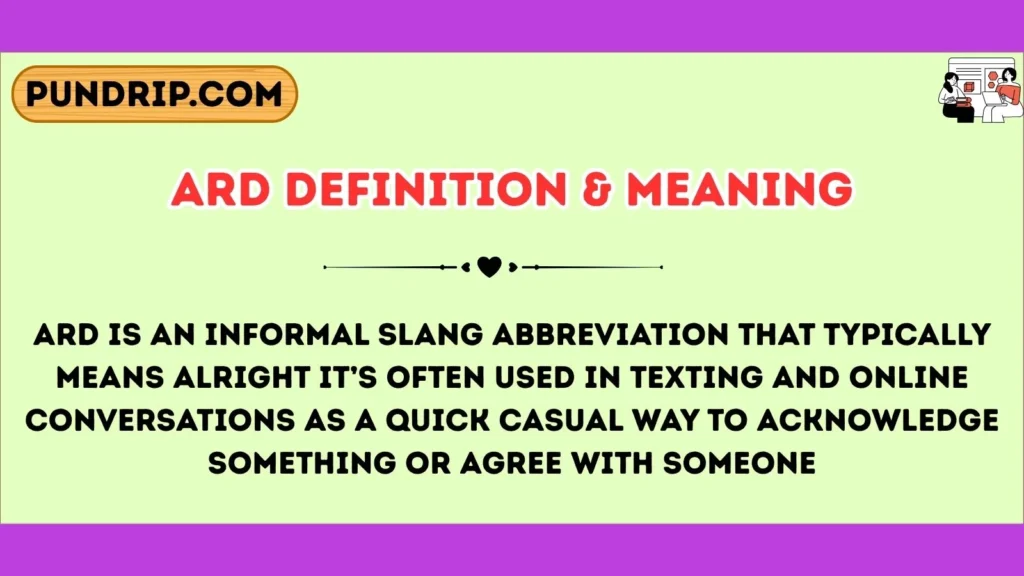
“ARD” is an informal slang abbreviation that typically means “alright.” It’s often used in texting and online conversations as a quick, casual way to acknowledge something or agree with someone. Instead of typing out the full word, people shorten it to save time and keep conversations flowing smoothly.
The tone of “ARD” can vary depending on how it’s used. In some cases, it simply means “okay” or “fine,” signaling agreement or acceptance. For example, if someone says, “Let’s meet at 6,” replying with “ARD” means you’re okay with the plan.
However, tone plays a major role. Sometimes “ARD” can sound neutral, while other times it may come across as slightly dismissive or uninterested. For instance, if someone shares something important and receives only “ARD” in response, it might feel like a lack of enthusiasm.
Overall, “ARD” is a flexible expression that depends heavily on context. It’s simple, quick, and widely used in casual conversations, especially among younger audiences.
Background & History
The term “ARD” evolved from the spoken word “alright,” particularly in informal dialects where pronunciation naturally shortens the word. Over time, this spoken shorthand made its way into texting and online communication, where brevity is highly valued.
As mobile messaging became more popular, users began shortening words to type faster. Just like “ok” became standard for “okay,” “ARD” emerged as a stylized, phonetic abbreviation of “alright.” It reflects how people actually speak in relaxed, everyday conversations.
Its usage gained traction in urban slang and among online communities, especially in regions where speech patterns emphasize shortened pronunciations. Social media platforms, chat apps, and gaming environments helped spread the term globally.
Today, “ARD” is commonly recognized in informal digital spaces. While it may not appear in formal dictionaries, its meaning is widely understood by those familiar with modern texting culture. Its growth shows how language continues to evolve alongside technology.
Usage in Various Contexts

“ARD” is versatile and can be used in different types of conversations. In casual chats, it often functions as a quick acknowledgment. For example, when making plans, responding with “ARD” confirms agreement without adding extra words.
In friendly conversations, it can signal that everything is okay or that there’s no issue. Someone might say, “Sorry for being late,” and the reply “ARD” indicates forgiveness or acceptance.
In group chats, it helps keep conversations moving efficiently. Instead of long replies, users rely on short forms like “ARD” to maintain a fast-paced exchange.
However, context matters. In emotional or serious discussions, using “ARD” might seem too brief or indifferent. It can unintentionally come across as dismissive if a more thoughtful response is expected.
It’s also common in gaming chats, social media comments, and messaging apps, where speed and brevity are important. Overall, its meaning remains consistent, but the tone shifts based on the situation.
Common Misconceptions & Clarifications
One common misunderstanding is that “ARD” always means agreement. While it often does, it can also simply acknowledge a message without expressing strong feelings.
Another misconception is that it’s rude by default. In reality, “ARD” isn’t inherently negative—it only feels rude if the context requires a more detailed or emotional response.
Some people also confuse “ARD” with other abbreviations or assume it has a hidden meaning in every situation. In most cases, it’s just a casual shorthand for “alright.”
Clarifying tone is key. If you’re unsure how it’s meant, consider the conversation’s context and the relationship between the people involved.
Understanding these nuances helps prevent misinterpretation and keeps communication clear and effective.
Similar Terms & Alternatives
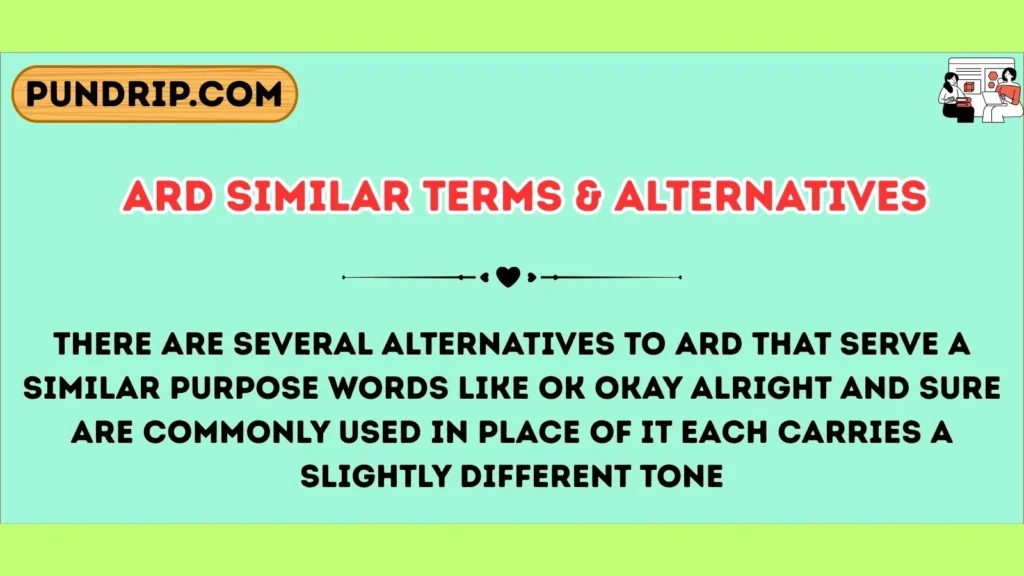
There are several alternatives to “ARD” that serve a similar purpose. Words like “ok,” “okay,” “alright,” and “sure” are commonly used in place of it. Each carries a slightly different tone.
For example, “ok” is neutral and widely accepted in both casual and semi-formal settings. “Sure” often feels more positive and engaged, while “alright” can sound more complete and expressive than “ARD.”
Other slang terms like “bet” or “cool” may also be used depending on the context. These alternatives can sometimes convey more enthusiasm than “ARD.”
Choosing the right term depends on how you want to come across—casual, polite, or enthusiastic. While “ARD” is efficient, it’s not always the best choice in every situation.
How to Respond to This Term
Responding to “ARD” depends on the flow of the conversation. In most cases, it doesn’t require a complex reply. If it’s used to confirm plans, you can simply continue the conversation or provide additional details.
If you feel the response is too brief or unclear, you can ask a follow-up question. For example, “ARD, see you later?” helps confirm understanding.
In friendly chats, you can mirror the tone and keep things casual. However, in more serious discussions, it’s better to respond with more clarity and detail.
The key is to match the tone and context of the conversation. This ensures smooth communication without overthinking a simple abbreviation.
Regional or Cultural Differences
“ARD” is more common in certain regions and communities, particularly where spoken language naturally shortens “alright.” In some areas, it’s a normal part of everyday texting, while in others, it may be less familiar.
Cultural context also affects how it’s perceived. In informal environments, it’s widely accepted and understood. In more formal or professional settings, it might seem out of place or too casual.
Different age groups may also interpret it differently. Younger users are more likely to recognize and use it, while older individuals might find it confusing or unclear.
Understanding these differences helps ensure appropriate usage depending on who you’re communicating with.
Comparison with Similar Terms
Compared to “ok” or “okay,” “ARD” feels more informal and conversational. While “ok” is universally accepted, “ARD” is more niche and tied to specific texting styles.
Unlike “sure,” which often conveys willingness, “ARD” can sometimes feel more neutral or passive. It doesn’t always express enthusiasm.
Compared to slang like “bet,” which often signals excitement or confidence, “ARD” is more laid-back and understated.
These subtle differences make it important to choose the right term based on tone and context.
Usage in Online Communities & Dating Apps
In online communities, “ARD” is commonly used for quick acknowledgments. It helps keep conversations short and efficient, especially in fast-moving chats.
On dating apps, its meaning depends heavily on tone. A simple “ARD” might indicate agreement, but it can also come across as low effort if overused. In conversations where engagement matters, more expressive replies are often better.
Using “ARD” sparingly in these contexts helps maintain interest and avoids sounding uninterested. It works best when combined with other words or responses.
Hidden or Offensive Meanings
In most cases, “ARD” does not have offensive or hidden meanings. It’s generally safe and neutral. However, tone can still affect how it’s perceived.
If used in a dismissive way, it might feel rude or uninterested, especially in sensitive conversations. But this is more about context than the word itself.
There are no widely recognized offensive interpretations, making it a relatively safe slang term in casual communication.
Suitability for Professional Communication
“ARD” is not suitable for professional or formal communication. In workplace emails, business chats, or official messages, it’s better to use complete words like “alright,” “okay,” or “understood.”
Using slang in professional settings can appear unpolished or unclear. Clear and respectful communication is always preferred in these environments.
While it’s fine among friends or peers, it should be avoided in formal contexts to maintain professionalism.
FAQs:
What does ARD mean in texting?
It usually means “alright” and is used to show agreement or acknowledgment.
Is ARD rude or disrespectful?
Not necessarily. It depends on tone and context.
Can I use ARD in formal messages?
No, it’s too informal for professional communication.
Does ARD always mean yes?
Not always—it can also mean “okay” without strong agreement.
Is ARD commonly used worldwide?
It’s more common in informal and youth-driven online spaces.
How should I reply to ARD?
You can continue the conversation or clarify if needed.
Conclusion:
“ARD” is a simple yet flexible slang term that reflects how modern communication prioritizes speed and efficiency.
While it usually means “alright,” its tone can vary based on context, relationship, and platform.
Understanding when and how to use it ensures smoother conversations and avoids misunderstandings.
Whether you’re texting friends or chatting online, being aware of its nuances helps you communicate more effectively and confidently.